Dispatchable generation fit for future generations – why ESB’s hydrogen ambitions matter for the North West’s clean power future.

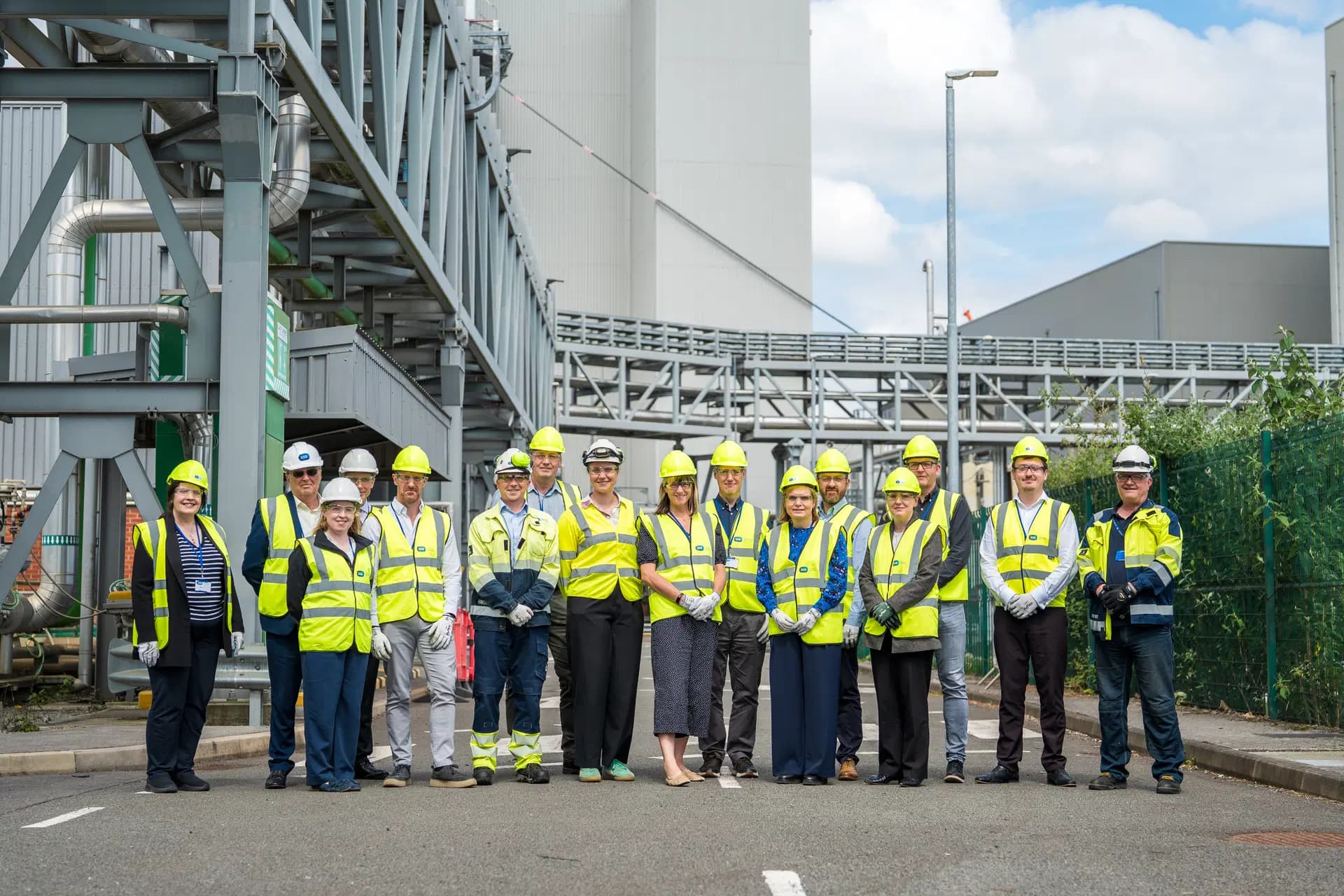
This week, Net Zero North West took our June board meeting on the road to ESB's Carrington Power Station in Manchester, and came away more convinced than ever that the UK's path to clean power runs straight through sites like this one.
Before the formal business began, the ESB team gave us a walk-through of the site's history and where it's headed next, followed by a tour of the plant itself. What struck the board most wasn't just the scale of the operation, but the scale of the ambition behind it.
From coal to clean power.
Carrington has been generating power for the best part of half a century, but it hasn't stood still. For 40 years the site ran on coal. In 2016, it was reborn as an 884MW gas-fired combined cycle gas turbine (CCGT) plant generating power for more than 1 million homes and businesses in the Greater Manchester area. This move brought flexibility, efficiency, and a significant step down the emissions curve from what came before.
That history matters and serves as a reminder that power stations aren't static pieces of infrastructure; they're long-term assets that can be reinvested in, reimagined, and decarbonised in step with the technology and policy landscape around them. ESB's own corporate ambition is to reach net zero by 2040, and Carrington is central to how they get there.
Today, the station plays a vital role in UK energy security: domestic generation, diverse sources of supply, and crucially flexibility. CCGT plants like Carrington can ramp up and down to match demand in a way that intermittent renewables can't always do alone, making them a key partner to wind, solar and tidal rather than a competitor.
Project Arrington: the next chapter.
The most exciting part of the visit was hearing about what is next for the power station. Through Project Arrington, ESB is exploring how the station could burn hydrogen alongside or instead of natural gas. ESB sits on the HyNet steering committee, plugging Carrington directly into one of the UK's flagship hydrogen and carbon capture clusters.
The technical challenge here is genuinely new ground. ESB is working with their CCGT turbine manufacturers to understand what upgrades the station would need to burn hydrogen, and how high a hydrogen blend ratio existing and future turbines can realistically handle. The research and developing being done to make Carrington hydrogen ready has never been done before at this scale, helping to make dispatchable hydrogen-to-power generation a reality, whether that hydrogen is blue or green.
Why this matters for the North West's industrial story
Carrington is a powerful illustration of the argument at the heart of Net Zero North West's latest report, Why Industry Matters, launched in Parliament last week. The report makes the case that the North West doesn't have to choose between decarbonisation or a thriving industrial base. Delivered correctly, the energy transition and industry go hand in hand.dispatchable-generation-fit-for-future-generations
That's the principle NZNW is built on: we are committed to decarbonisation, not deindustrialisation. Sites like Carrington show what that looks like in practice. Taking existing infrastructure, existing skills, and existing communities, repurposed and reinvested in rather than shut down and forgotten. Low-carbon, flexible power generation of the kind being developed at Carrington is an essential piece of the UK's clean power puzzle, sitting alongside the renewables and nuclear capacity the country also needs to build.
Our June board meeting continued after the site visit with updates from Tom Addison on the Bee Net Zero industrial cluster and from Arjan Geveke of the Energy Intensive Users Group on the policy landscape facing energy-intensive industry, both reinforcing just how much coordinated effort, across infrastructure, policy and place, is needed to get this transition right for the communities and industries across our region.
For now, our thanks go to the ESB team at Carrington for hosting us and for the openness with which they shared their progress and the challenges still ahead. It's exactly the kind of practical, ambitious decarbonisation story the North West needs more of.